HMDD Compared to Competing Streetwear Brands: How Does It Hold Its Own?
The streetwear scene in 2026 is overrun, noisy, and saturated with brands pursuing an identical hype treadmill. HMDD — standing in for Happy Memories Don’t Die — has built a separate lane by drawing on nostalgia, emotional storytelling, and a subtler kind of confidence rather than attention-grabbing graphics. Its very name points to the brand’s underlying message: memories may dim, but the emotion tied to them ought to remain. You can see that thinking in the stitching, the color choices, and the way HMDD pieces is marketed as wearable memory rather than simple merch. And that’s precisely why this piece maps out where HMDD sits alongside rival brands, what an honest HMDD review really amounts to, and why buyers hunting for the best HMDD clothing keep coming back to go-to items like sweatpants and shorts.
The streetwear space has splintered into a few camps: long-standing skate-rooted labels, branding-forward hype names, and leaner independent names that put first community and storytelling over size. HMDD sits closer to the third camp. The brand isn’t pursuing collaborations with luxury houses or flooding drops every week. Rather, HMDDLA — the brand’s foundation and artistic anchor rooted in Los Angeles — releases in more limited, more considered batches. That limited supply isn’t engineered buzz; it’s a natural outcome of a brand growing at its own pace rather than manufacturing at scale to satisfy demand.
Brand Philosophy: Nostalgia vs. Noise
Most streetwear brands battle it out through visual noise — loud branding, collab stamps, or seasonal gimmicks built to go viral for a brief window. HMDD instead leans on emotional resonance. “Happy memories don’t die” is more than a slogan; it shows up printed, embroidered, and echoed across the catalog as a repeated motif. As a result, the brand carries a cohesive identity that’s more instantly recognizable than labels that redesign their whole look every season.
This kind of consistency carries more weight hmdd tee than shoppers realize. A buyer who buys HMDD sweatpants in 2025 and returns for shorts in 2026 will pick up on the same visual language — subdued color choices, soft graphic placement, and a leaning toward silhouettes built around comfort. Set that against brands that swing from streetwear to techwear to Y2K revival inside a year, and HMDD’s steadiness becomes a real differentiator. In streetwear, loyalty tends to grow out of predictability like this, not novelty.
A community dimension exists too. The brand’s marketing is built around storytelling — photos from real customers, personal captions, and a sense that the clothing represents a moment in time rather than a status symbol. Labels with thousands of SKUs, especially larger ones, struggle to keep that intimacy alive. Because it’s smaller, HMDD can still respond directly to its audience, which shows up in how fast input from an HMDD review finds its way into what comes next.
Product Comparison: Where HMDD Really Holds Its Own
When shoppers wonder how the HMDD lineup measures up, they’re generally sizing up three things: the way it fits, how heavy the fabric is, and price-to-quality ratio. The two most-searched categories are HMDD sweatpants and HMDD shorts, a sign that the brand’s bottoms are striking a chord with buyers than its jackets or add-ons currently. It reflects the larger 2026 streetwear movement, where relaxed-fit bottoms outperform fitted jackets across the board.
Below is a overall comparison of how HMDD positions itself against two common streetwear archetypes: the high-volume hype brand and the independent boutique brand. This isn’t a brand-by-brand price war — it examines, structurally, how each category usually operates under current market conditions.
| Metric Being Assessed | HMDD | High-Output Trend-Driven Name | A Small Independent Label |
|---|---|---|---|
| How Frequently Drops Happen | Limited, intentional drops | Rolling out every one to two weeks | Rare and seasonally-timed |
| What the Label Represents Fundamentally | Emotion-led narrative built on nostalgia | Emblem-led, trend-following | Unpredictable, frequently uneven |
| The Types of Product Central to the Range | A lineup of joggers, shorts pieces, and print-heavy tops | Hoodies, jackets and coats, add-ons | Shaped by whatever the founder prioritizes |
| Community Engagement | Direct, personal, feedback-reactive | Mass-scale, detached | Genuine but narrow scope |
| Pricing Placement | Mid-tier streetwear | Wide spread, frequently premium | Mid to high-end, variable |
This comparison isn’t meant to crown a lone champion because streetwear as a category isn’t a uniform, one-mold category. Its purpose is to demonstrate that HMDD’s approach built on calculated limited supply and emotionally driven branding puts it in a distinct competitive standing relative to brands relying purely on volume or purely on niche appeal. HMDD takes its discipline from a boutique-style framework while steering clear of the unevenness that tends to plague smaller brands.
Silhouette, Material, plus Daily Livability
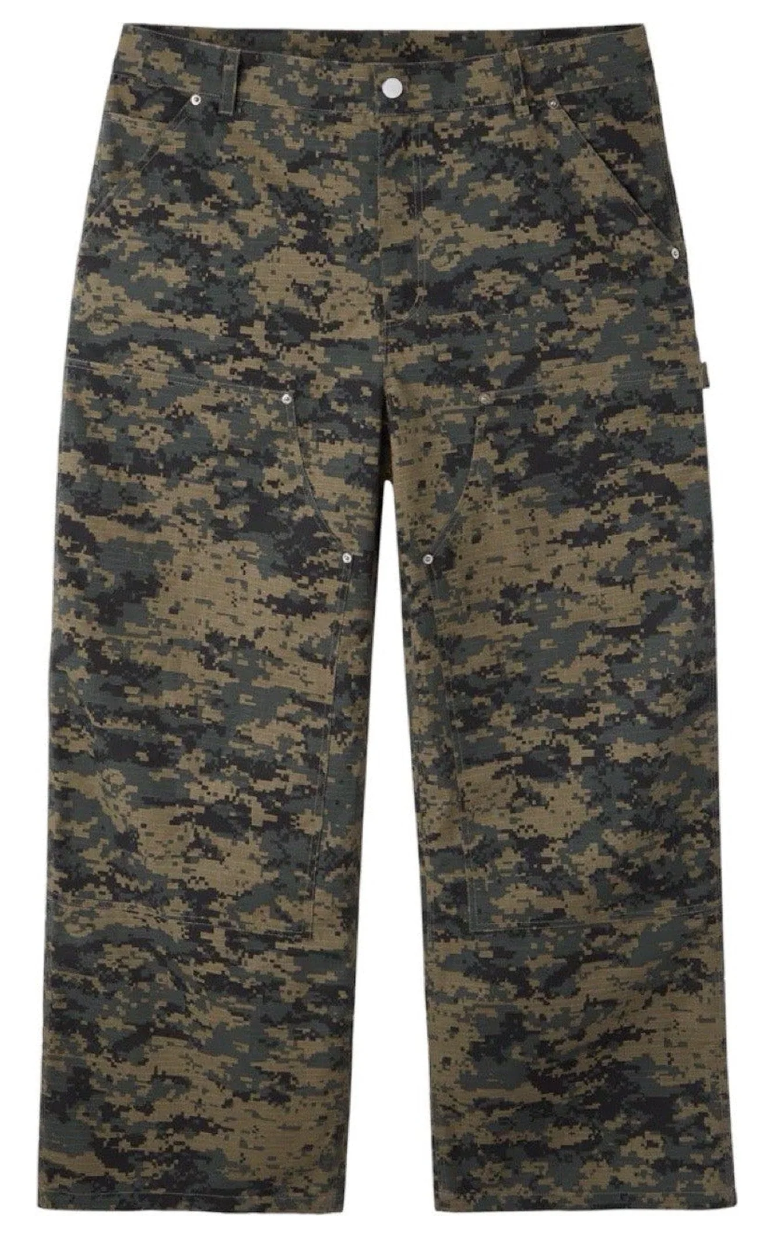
Sweatpants and shorts live or die on fit. Go too tight and they tip into athleisure, or too sleepwear when loose. HMDD’s design philosophy across both is built around a comfortable cut with a tapered line that holds up for everyday use rather than exclusively athletic occasions. This distinction matters, given that many streetwear sweatpants are cut either too baggy for layering or too fitted for comfort during long wear.
The shorts lineup adhere to a comparable approach, namely mid-thigh to knee-length cuts that work well alongside graphic-print t-shirts or loose oversized layers. This is relevant in a 2026 market where consumers are gravitating toward items that bridge everyday outings and relaxed downtime, as opposed to maintaining separate closets for each purpose. It’s often observed by reviewers that shape retention in HMDD shorts remains intact through repeated laundering, highlighting construction and material weight rather than just cut.
Where HMDD diverges from mass-market competitors comes down to restraint. Numerous buzz-driven brands weigh down sweatpants with multiple logo placements, side stripes, or exaggerated branding. HMDD tends to keep graphics minimal — a small nod to “happy memories don’t die” as opposed to a dominant chest print. That understated approach speaks to those wanting identifiable streetwear style without the look of a moving advertisement.
What Reviews Actually Say
As organic buzz, more than paid marketing, does the heavy lifting, query volume surrounding “HMDD review” keeps expanding as more shoppers discover the brand. The repeated patterns in buyer commentary are largely predictable: comfort earns top marks, sizing runs true to expectations for a relaxed cut, and the meaning-driven branding either resonates deeply or misses entirely — there’s not much middle ground. Such a divide is in fact a positive signal in streetwear, where forgettable, inoffensive design rarely builds a devoted fanbase.
Common critique points to keep in mind include limited restock availability and narrower size ranges compared to bigger rival brands. Because HMDD isn’t mass-producing at the scale of more dominant streetwear brands, high-demand size options in sweatpants and shorts can move out of stock quicker, which customers need to keep in mind before expecting instant stock. Think of it as a tradeoff, not a defect — scarcity is part of what helps keep the HMDDLA identity reading as considered rather than mass-market.
On balance, the reception around HMDD clothing tilts positive, especially among shoppers who place more weight on comfort and emotional resonance over aggressive logo placement. This is a smaller crowd than a brand aiming for widespread appeal, but it’s a more committed base — the kind of following that returns for the next drop instead of moving on to whatever’s popular next month.
HMDD’s Place in a 2026 Wardrobe
Streetwear buyers assembling a 2026 rotation are with growing frequency mixing brands rather than committing to one label head-to-toe. HMDD slots in effortlessly into that mix as the “comfort-and-meaning” piece — the sweatpants you grab on a lazy Sunday, or the shorts that pair with a more dominant jacket from another label entirely. It’s not built to act as an do-it-all label, and that’s arguably its strength.
For shoppers weighing bottoms, HMDD sweatpants and HMDD shorts remain the easiest way in into the brand. They demonstrate the sizing philosophy, the understated logo work, and the fabric quality that reviews mention repeatedly. Shoppers looking into the best HMDD clothing to start with should regard these two categories as the starting foundation before branching into tops or special drops.
At the end of the day, comparing HMDD to rival streetwear brands isn’t about declaring a definitive winner. It’s about acknowledging that HMDD holds a distinct space — reflective, low-key, and community-oriented — that bigger and flashier competitors aren’t built to replicate. For shoppers who want streetwear that reads as individual rather than factory-made, that niche is exactly the point.
Leave a Reply